
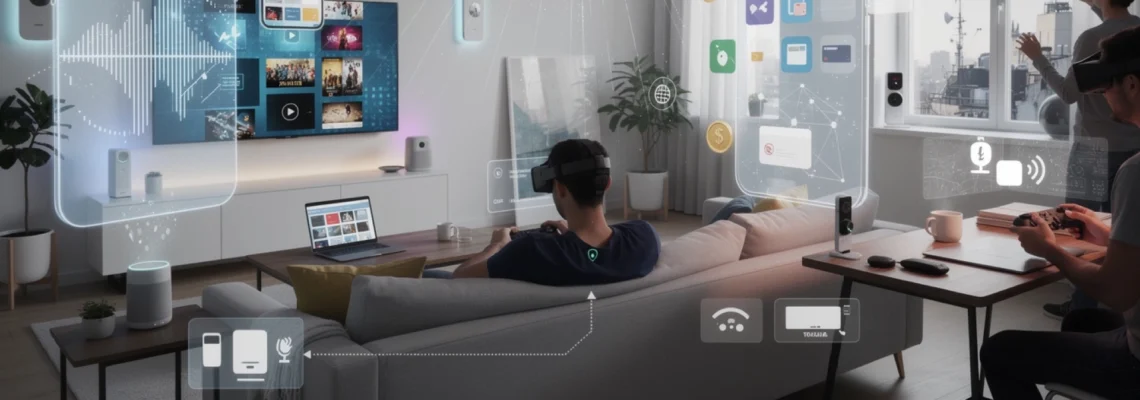
The modern world has become intricately woven with technological innovations that transform how we interact, work, and live on a fundamental level. From the moment you wake up to your smartphone alarm to the instant you stream your favourite show before bed, technology silently orchestrates countless aspects of daily existence. These advances aren’t merely convenient additions to our routines—they represent a profound shift in human behaviour and societal structure that continues to accelerate at an unprecedented pace.
Consider how artificial intelligence now anticipates your needs through predictive text, while Internet of Things devices automatically adjust your home environment based on your preferences. Meanwhile, blockchain technology revolutionises financial transactions, and augmented reality enhances everything from shopping experiences to educational content. The convergence of these technologies creates an interconnected ecosystem that fundamentally alters how society functions.
Artificial intelligence and machine learning integration in consumer applications
Artificial intelligence has seamlessly integrated into consumer applications, creating personalised experiences that adapt to individual preferences and behaviours. Modern AI systems process vast amounts of user data to deliver increasingly sophisticated services that feel almost intuitive in their responsiveness.
Natural language processing in virtual assistants: alexa, siri, and google assistant
Virtual assistants represent one of the most visible applications of natural language processing technology in everyday life. These sophisticated systems utilise advanced neural networks to interpret human speech, understand context, and provide relevant responses. Amazon’s Alexa processes over 100,000 voice commands daily, while Google Assistant handles millions of queries across multiple languages.
The underlying technology combines speech recognition, natural language understanding, and machine learning algorithms to create conversational interfaces. These assistants continuously improve their accuracy through deep learning models that analyse patterns in user interactions. Modern virtual assistants can now understand complex multi-part requests, maintain context across conversations, and even detect emotional nuances in speech patterns.
Computer vision implementation in instagram filters and snapchat lenses
Computer vision technology powers the augmented reality filters that have become integral to social media experiences. Instagram and Snapchat process billions of images monthly through sophisticated algorithms that can identify facial features, track movements, and overlay digital elements in real-time. These applications utilise convolutional neural networks to detect and analyse facial landmarks with remarkable precision.
The technology behind these filters involves complex mathematical calculations that map three-dimensional facial geometry onto two-dimensional camera feeds. Machine learning models trained on millions of facial images enable accurate feature detection across diverse demographics and lighting conditions. This computer vision implementation has democratised content creation, allowing users to produce professional-quality augmented reality experiences without technical expertise.
Recommendation algorithms powering netflix, spotify, and amazon prime
Recommendation systems represent sophisticated implementations of machine learning that analyse user behaviour patterns to predict preferences. Netflix’s algorithm processes over 1 billion hours of viewing data monthly, while Spotify analyses 70 million tracks to create personalised playlists. These systems combine collaborative filtering, content-based filtering, and deep learning approaches to deliver increasingly accurate suggestions.
The algorithms consider multiple variables including viewing history, time of day, device type, and demographic information to create comprehensive user profiles. Matrix factorisation techniques help identify hidden patterns in user preferences, while neural collaborative filtering enhances prediction accuracy. These recommendation engines significantly influence consumer behaviour, with Netflix reporting that 80% of watched content originates from algorithmic suggestions.
Predictive text and Auto-Correction in SwiftKey and gboard technologies
Predictive text systems utilise sophisticated language models to anticipate user input and reduce typing effort. SwiftKey and Gboard employ neural networks trained on massive text corpora to understand language patterns, contextual relationships, and individual typing habits. These systems adapt to personal vocabulary, frequently used phrases, and writing style over time.
The underlying technology combines n-gram language models with recurrent neural networks to predict the most likely next word or phrase. Modern keyboards analyse typing patterns, common word sequences, and contextual clues to provide increasingly accurate predictions. Auto-correction algorithms simultaneously work to identify and fix typing errors using statistical models that consider phonetic similarities and common mistake patterns.
Internet of things (IoT) ecosystem transformation in smart homes
The Internet of
Things (IoT) ecosystem is transforming traditional households into interconnected smart homes where devices communicate seamlessly to optimise comfort, security, and energy efficiency. In this environment, sensors, appliances, and controllers share data continuously, enabling automation that would have seemed futuristic only a decade ago. For many people, this means your lights, heating, security cameras, and even kitchen appliances can be managed from a single app or through voice commands. This integration of smart home technology not only enhances convenience but also provides deeper insights into daily routines and resource consumption.
Connected device integration: nest thermostats and philips hue lighting systems
Connected devices such as Nest thermostats and Philips Hue lighting systems sit at the core of the modern smart home. These devices use Wi-Fi and low-power wireless protocols to communicate with central hubs and cloud platforms, allowing you to control heating and lighting from anywhere with an internet connection. Nest thermostats, for example, analyse your schedule and occupancy patterns to create intelligent heating and cooling routines that balance comfort with energy savings.
Philips Hue lighting systems extend this integration by enabling custom scenes, scheduling, and dynamic lighting that reacts to time of day or media content. Through APIs and smart home platforms like Google Home and Apple HomeKit, these devices can be combined into complex automations—for instance, lowering the thermostat and dimming lights when you start a movie. As manufacturers adopt common standards such as Matter, interoperability between different brands improves, making it easier for you to build a cohesive smart home ecosystem without being locked into a single vendor.
Voice-controlled home automation through amazon echo and google nest hub
Voice-controlled smart speakers like Amazon Echo and Google Nest Hub bring intuitive interaction to IoT devices by acting as central command centres. Powered by natural language processing and cloud-based AI, these devices translate spoken commands into actions that trigger connected thermostats, lights, locks, and entertainment systems. Instead of juggling multiple apps, you can simply say, “Turn off the living room lights” or “Set the temperature to 21 degrees,” and the system orchestrates the response across devices.
This hands-free interface is particularly valuable in scenarios where convenience and accessibility matter, such as when cooking, caring for children, or supporting people with mobility challenges. Over time, these assistants learn from usage patterns, enabling more proactive automations like suggesting routines or automatically adjusting settings based on your habits. However, this reliance on always-listening microphones raises privacy concerns, prompting many users to review data-sharing settings, mute microphones when not needed, and regularly delete stored voice recordings.
Smart security networks: ring doorbells and arlo camera systems
Smart security networks, including Ring doorbells and Arlo camera systems, have redefined how we monitor and protect our homes. These devices integrate high-definition cameras, motion sensors, and two-way audio, allowing you to see and talk to visitors from your smartphone, even when you are miles away. Motion-activated alerts and cloud-based video storage provide continuous oversight, offering peace of mind whether you are at work or on holiday.
AI-driven features such as object and person detection help distinguish between people, animals, and passing cars, reducing false alarms and providing more relevant notifications. Some systems can even integrate with smart locks, enabling remote delivery access or guest entry. At the same time, the proliferation of connected cameras raises important questions about data security, neighbourhood privacy, and the responsible sharing of footage with authorities. When you deploy these technologies, it becomes essential to secure accounts with strong passwords, enable two-factor authentication, and carefully manage who can access recorded content.
Energy management optimisation via smart meters and tesla powerwall
Energy management in smart homes is being transformed by smart meters and home battery systems such as the Tesla Powerwall. Smart meters provide real-time visibility into electricity usage, breaking down consumption by time and often by device category. This granular insight helps you identify wasteful habits—like leaving appliances on standby—and adjust behaviour to lower bills and reduce your carbon footprint. In some countries, dynamic pricing models further incentivise you to shift heavy energy use to off-peak hours.
The Tesla Powerwall and similar home batteries take optimisation a step further by storing energy from solar panels or the grid and releasing it when demand or prices are high. Combined with intelligent energy management software, these systems automatically decide when to store, use, or even sell power back to the grid. The result is a more resilient household energy system that can keep essential devices running during outages while supporting broader grid stability. As we move towards a cleaner energy future, this kind of distributed energy storage will play a central role in making everyday living more sustainable.
Mobile computing revolution and 5G network infrastructure
The mobile computing revolution, powered by smartphones and tablets, has fundamentally changed how we work, shop, and stay entertained, placing powerful computers in our pockets. With the arrival of 5G network infrastructure, this transformation is accelerating as faster speeds and lower latency unlock new categories of mobile experiences. Download rates up to 10 times faster than 4G and latency as low as one millisecond enable real-time applications that were previously restricted to wired connections.
For consumers, this means smoother high-definition video streaming, more responsive cloud gaming, and seamless video conferencing even in crowded urban environments. For businesses and cities, 5G supports dense networks of IoT devices, enabling smart traffic systems, remote monitoring, and industrial automation. As more services move to the cloud, mobile devices act as flexible gateways rather than isolated endpoints, allowing you to access complex applications and large datasets without needing powerful local hardware.
Blockchain technology and cryptocurrency adoption in financial services
Blockchain technology is reshaping financial services by providing decentralised, tamper-resistant ledgers that can record transactions without relying on a single central authority. Cryptocurrencies like Bitcoin and Ethereum were the first mainstream applications, but the underlying blockchain architecture now supports a growing ecosystem of financial products and services. For everyday users, this translates into faster cross-border payments, programmable money, and new ways to store and transfer value outside traditional banking systems.
Financial institutions are increasingly exploring permissioned blockchains to streamline settlements, reduce fraud, and automate compliance. At the same time, regulators around the world are working to create frameworks that protect consumers while fostering innovation. As you consider participating in this space—whether through investment, payments, or decentralised applications—it becomes crucial to understand both the opportunities and the risks, including volatility, security threats, and evolving legal landscapes.
Decentralised finance (DeFi) platforms: uniswap and compound protocol
Decentralised finance (DeFi) platforms such as Uniswap and Compound Protocol extend blockchain’s capabilities by replicating traditional financial services without intermediaries. Uniswap allows users to swap tokens directly from their wallets using automated liquidity pools, where pricing is determined by algorithms rather than centralised order books. This model offers continuous liquidity and open access, letting anyone become a liquidity provider and earn fees by contributing assets.
Compound Protocol focuses on decentralised lending and borrowing, enabling users to deposit cryptocurrencies to earn interest or borrow against their holdings without credit checks. Interest rates adjust dynamically based on supply and demand, managed entirely by smart contracts. While DeFi promises greater financial inclusion and transparency, it also introduces new risks, such as smart contract vulnerabilities, impermanent loss for liquidity providers, and the potential for rapid market swings. If you decide to explore DeFi, treating it like a high-risk, high-reward environment and starting with small, well-researched positions is a prudent approach.
Digital payment solutions: PayPal cryptocurrency and square’s bitcoin integration
Digital payment solutions are bridging the gap between traditional finance and cryptocurrencies, making everyday usage more practical. PayPal’s cryptocurrency integration allows users in selected regions to buy, hold, and sell digital assets directly within their existing accounts, lowering the barrier to entry. While these holdings often remain within the platform’s ecosystem, they introduce millions of users to the concept of digital wallets and blockchain-based value storage.
Square (now Block) has taken a similar approach by integrating Bitcoin into its Cash App, enabling peer-to-peer transfers and simple purchasing options. For small businesses, these platforms open up flexibility in accepting payments, particularly as consumer interest in alternative assets grows. However, it is vital to remember that cryptocurrency transactions can incur fees, tax implications, and significant price volatility. Viewing crypto payments as one component of a diversified digital payment strategy can help balance innovation with financial stability.
Non-fungible token (NFT) marketplaces: OpenSea and rarible ecosystems
Non-fungible tokens (NFTs) have created a new way to own and trade digital assets, from artwork and music to virtual real estate. Marketplaces like OpenSea and Rarible provide the infrastructure for creators to mint NFTs and for collectors to buy, sell, and showcase their holdings. Each NFT is recorded on a blockchain, giving it a unique, verifiable identity akin to a digital certificate of authenticity. For artists, this model can include programmable royalties, ensuring they receive a share every time their work is resold.
For everyday users, NFTs represent a new type of digital ownership that can be displayed across social media, virtual worlds, and digital galleries. Yet, the hype around high-priced sales can obscure significant challenges, including market speculation, environmental concerns on certain blockchains, and questions about long-term value. If you are considering NFTs, it can help to think of them more like collectibles than guaranteed investments, focusing on projects and creators whose work you genuinely value and understand.
Augmented reality (AR) and virtual reality (VR) applications in daily tasks
Augmented reality (AR) and virtual reality (VR) are moving beyond gaming to become practical tools for everyday tasks. AR layers digital information onto the physical world through smartphones or smart glasses, helping you navigate cities, visualise furniture in your home, or follow step-by-step repair instructions. VR, by contrast, immerses you in fully digital environments, ideal for virtual meetings, training simulations, and immersive education.
In retail, AR enables virtual try-ons for clothing, glasses, or cosmetics, reducing returns and making online shopping more intuitive. In the workplace, VR platforms support remote collaboration, allowing teams to meet in shared virtual spaces that feel more engaging than flat video calls. Think of AR and VR as new “screens” that blend or replace your physical environment, much like how smartphones extended the capabilities of traditional computers. As hardware becomes lighter and more affordable, we can expect these technologies to integrate more deeply into daily life, transforming how we learn, work, and socialise.
Cloud computing services revolutionising data storage and accessibility
Cloud computing services have revolutionised data storage and accessibility by shifting information from local devices to remote servers accessible over the internet. Platforms such as Amazon Web Services, Microsoft Azure, and Google Cloud host everything from personal photo libraries to global business applications. For individuals, this means your files, photos, and documents are available on any device, anywhere, as long as you have an internet connection, reducing the risk of data loss from hardware failure.
For organisations, cloud computing enables on-demand scalability, allowing them to add or reduce computing resources in minutes instead of months. This flexibility supports rapid innovation, as developers can experiment with new services without large upfront investments in physical infrastructure. Of course, the shift to the cloud also introduces new responsibilities: managing access controls, encrypting sensitive data, and complying with regional privacy regulations. When used thoughtfully, however, cloud technologies free us from the constraints of local storage and processing, making our digital lives more resilient, collaborative, and adaptable to change.